LAUNCH Science · W4L2 · lesson resources
Build a linked explanation
Choose one shared task or resource within the current lesson stage. Keep the lesson’s 40-minute timetable and 15-minute independent work.
We Do · Build a linked explanation
Point to the net direction for each gas. Then explain one adaptation.
| Gas | Alveolar air compared with arriving blood |
|---|---|
| Oxygen | Higher concentration |
| Carbon dioxide | Lower concentration |
Thin walls → what physical effect? → how does this help diffusion?
Discuss, point, write or dictate your first reason. Use one example first; extend only if there is time.
Reveal shared reasoning after an attempt
Oxygen: air → blood. Carbon dioxide: blood → air.
Thin walls give a short diffusion distance, so gases cross more quickly down their gradients. Blood flow and ventilation help maintain gradients.
This page keeps your writing while it stays open. It does not save or send it.
Model explanation and diagram
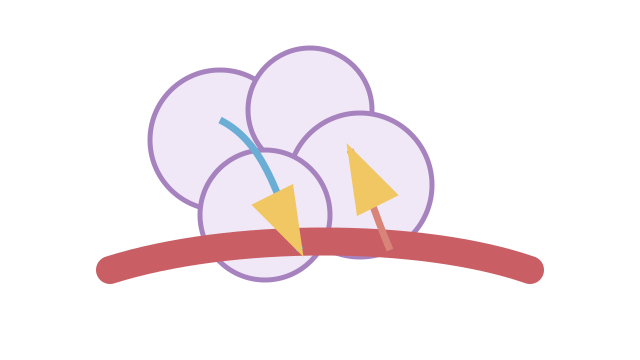
For each feature, say what it changes physically and why that affects diffusion. “Good lungs” is not an explanation.
Watch for: Both alveolar and capillary walls contribute to the diffusion path. Do not describe oxygen as choosing a destination.
Give a smaller support cue
Use three parts: the feature, what it changes, and how that affects diffusion. Start: “Thin walls help because…”
Optional video · Gas exchange in the lungs
Watch for: How does a thin wall help oxygen move into the blood?
Use a short relevant extract within I Do, then pause for an explanation. The clip replaces part of the modelling time.
Open the freesciencelessons video in a new tab
No-video version · use the same question
A thin wall gives a short diffusion distance. Oxygen moves down its concentration gradient from alveolar air into the arriving blood.
Internet is needed for the optional clip. It is concept teaching; viewing it is not completion of a practical.