GROWScience
Lesson overviewGROW · Week 6

Build an orbit model

Show it. Check it. Improve it.

Explain an orbit and compare the time planets take.
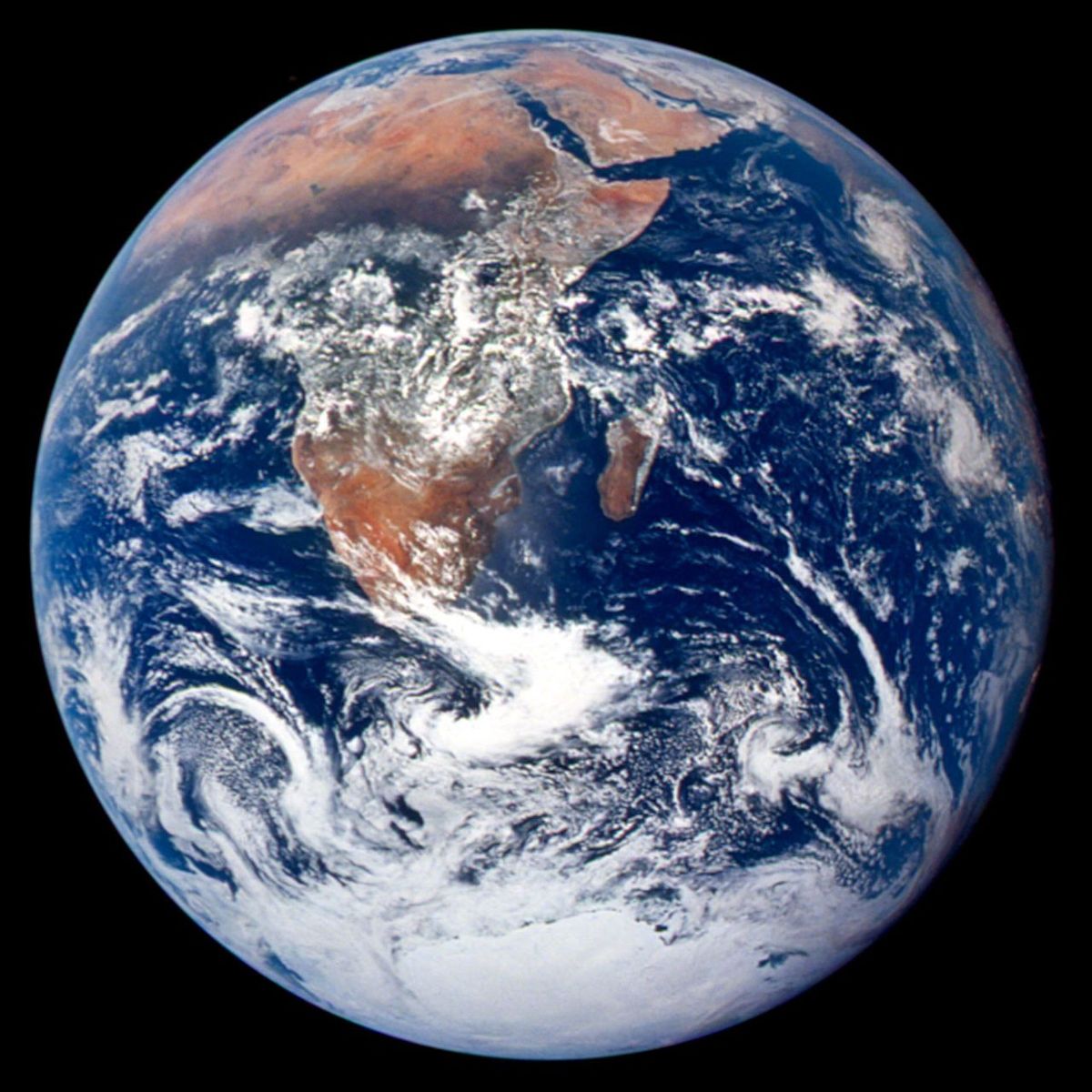
Earth seen from space, showing continents, oceans and cloud.Open image full size
Build and challenge an orbit modelSlide 1 of 14
StarterGROW · Week 6

Retrieve the order and arrows

Order the eight planet names from the Sun.

Point towards the Sun for gravity.

Point along the orbit for motion.

Build and challenge an orbit modelSlide 2 of 14
I Do · learn and modelGROW · Week 6

Choose a route and set up

Use Sun/Earth labels, counters, two paper arrows and the year table.

Choose desk model, drawing, or directing an adult.

Keep the kit on the desk. No swinging objects.

Build and challenge an orbit modelSlide 3 of 14
I Do · learn and modelGROW · Week 6

Two arrows, two meanings

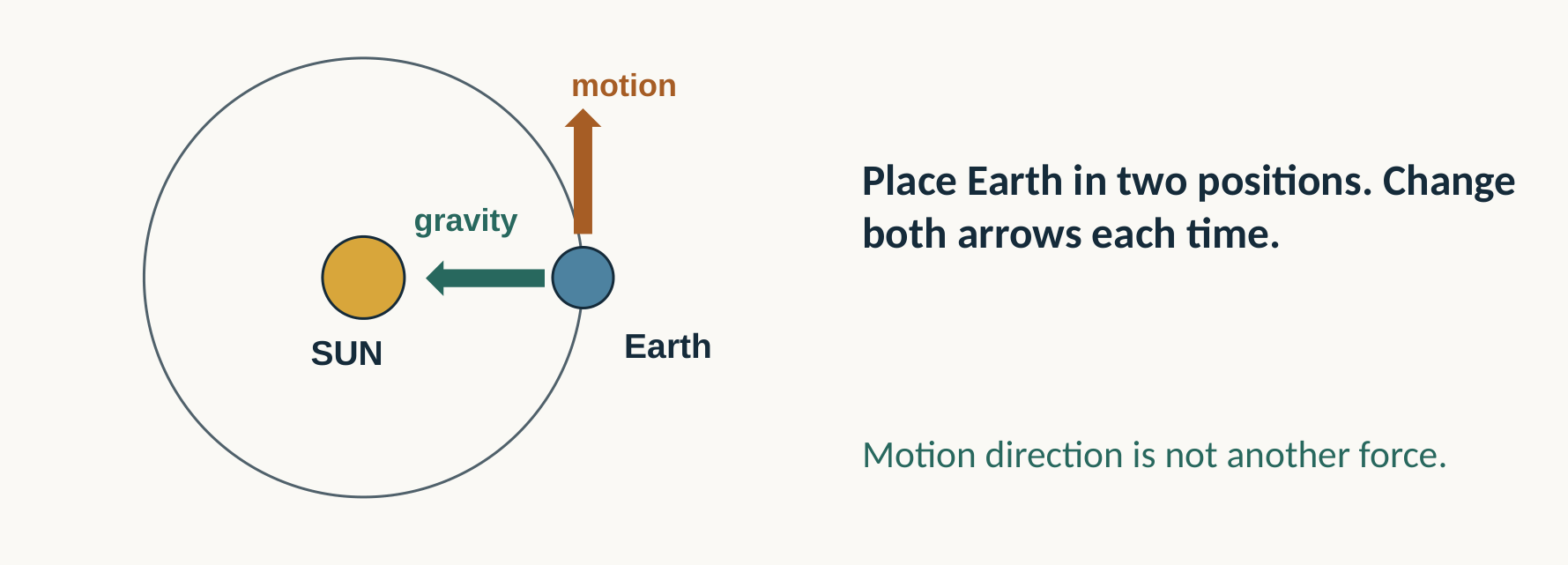
Earth is at the right of a circular orbit. Motion points upwards along the path and gravity points left towards the Sun; the activity asks pupils to move Earth and change both arrows.
Original teaching-pack diagram and labels.
Open image full size
Read the slide text
Earth is at the right of a circular orbit. Motion points upwards along the path and gravity points left towards the Sun; the activity asks pupils to move Earth and change both arrows. SUN Earth motion gravity Place Earth in two positions. Change both arrows each time. Motion direction is not another force.
Build and challenge an orbit modelSlide 4 of 14
I Do · learn and modelGROW · Week 6

Use the supplied year data

Mercury 88 Earth days

Earth 365 Earth days

Mars 687 Earth days

Jupiter 4,333 Earth days

Neptune 60,190 Earth days

Build and challenge an orbit modelSlide 5 of 14
I Do · learn and modelGROW · Week 6

Make a claim, then check it

Choose a pair. Predict which has the longer year.

Check the numbers and name the evidence.

Try a second pair or explain one model limit.

Build and challenge an orbit modelSlide 6 of 14
I Do · learn and modelGROW · Week 6

Record your evidence

_____ has the longer year because_____ days is more than_____ days.

Our model shows_____, but it does not show_____.

Build and challenge an orbit modelSlide 7 of 14
I Do · learn and modelGROW · Week 6

Pause for a two-minute check

Ask an adult or chosen partner to check one arrow.

Explain one year comparison.

Does ‘longer year’ mean more time for one orbit?

Build and challenge an orbit modelSlide 8 of 14
I Do · learn and modelGROW · Week 6

Improve one thing

Correct one arrow or number comparison.

Record two things the model shows.

Name one thing it does not show accurately.

Build and challenge an orbit modelSlide 9 of 14
I Do · learn and modelGROW · Week 6

Keep the evidence; return the kit

Check your name, planet order and recorded comparison.

Keep the drawing or explanation you want to use.

Return counters, arrows and labels.

Build and challenge an orbit modelSlide 10 of 14
Lundy Loop · pupil voiceGROW · Week 6

Your voice can change the lesson

What helped you understand the orbit?

What made the model or task difficult?

Point, speak privately, sign, or pass.

Build and challenge an orbit modelSlide 11 of 14
I Do · learn and modelGROW · Week 6

Agree one useful change

You said_____. We can change_____.

Did that change help? What still needs explaining?

Build and challenge an orbit modelSlide 12 of 14
Exit checkGROW · Week 6

Exit: show what you understand

Supported: which planet is third from the Sun?

Standard: what force keeps a planet in orbit?

Stretch: why does Earth not simply fall into the Sun?

Build and challenge an orbit modelSlide 13 of 14
Exit checkGROW · Week 6

Check the science before you leave

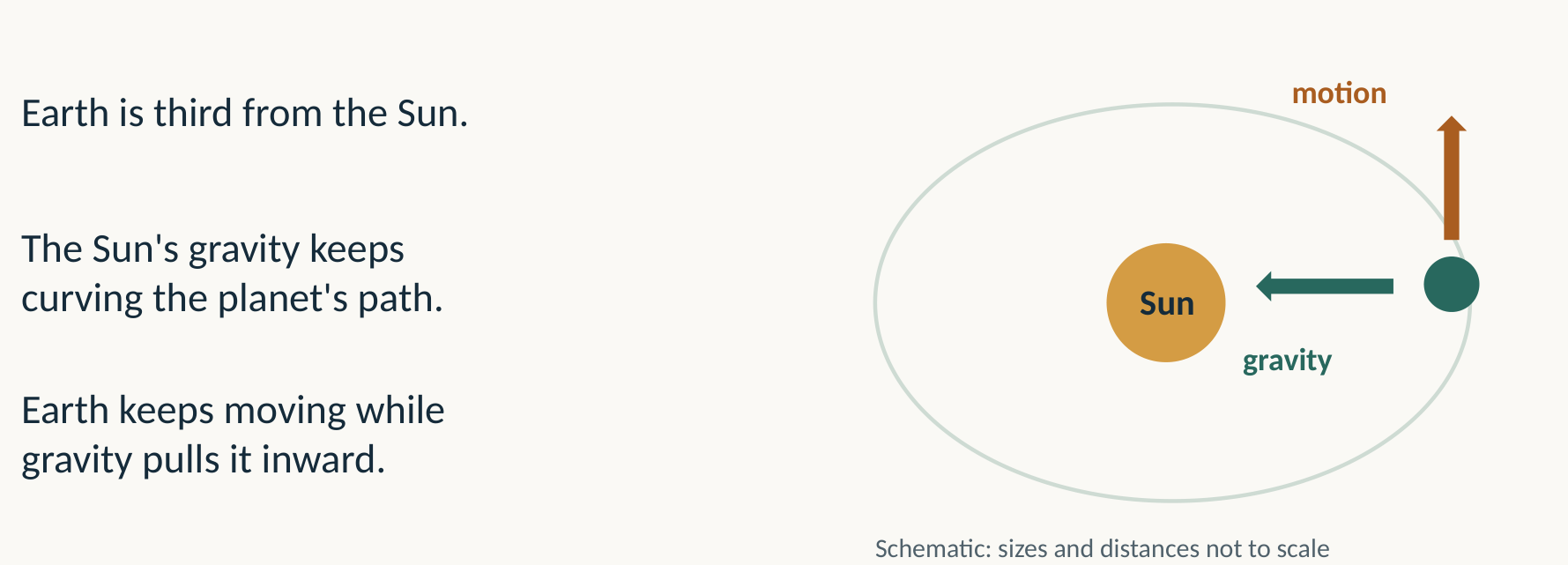
A planet is at the right of a schematic orbit. Motion points upwards along the path and gravity points inwards towards the Sun. Sizes and distances are not to scale.
Original teaching-pack diagram and labels.
Open image full size
Read the slide text
A planet is at the right of a schematic orbit. Motion points upwards along the path and gravity points inwards towards the Sun. Sizes and distances are not to scale. Earth is third from the Sun. The Sun's gravity keeps curving the planet's path. Earth keeps moving while gravity pulls it inward. Sun gravity motion Schematic: sizes and distances not to scale
Build and challenge an orbit modelSlide 14 of 14

Use the controls or left and right arrow keys. Printing includes pupil content; model answers remain separate.