GROWScience
Lesson overviewGROW · Week 5

Planning a fair test

Change one thing. Trust the comparison.

Plan variables, record with units and judge what the evidence can support.
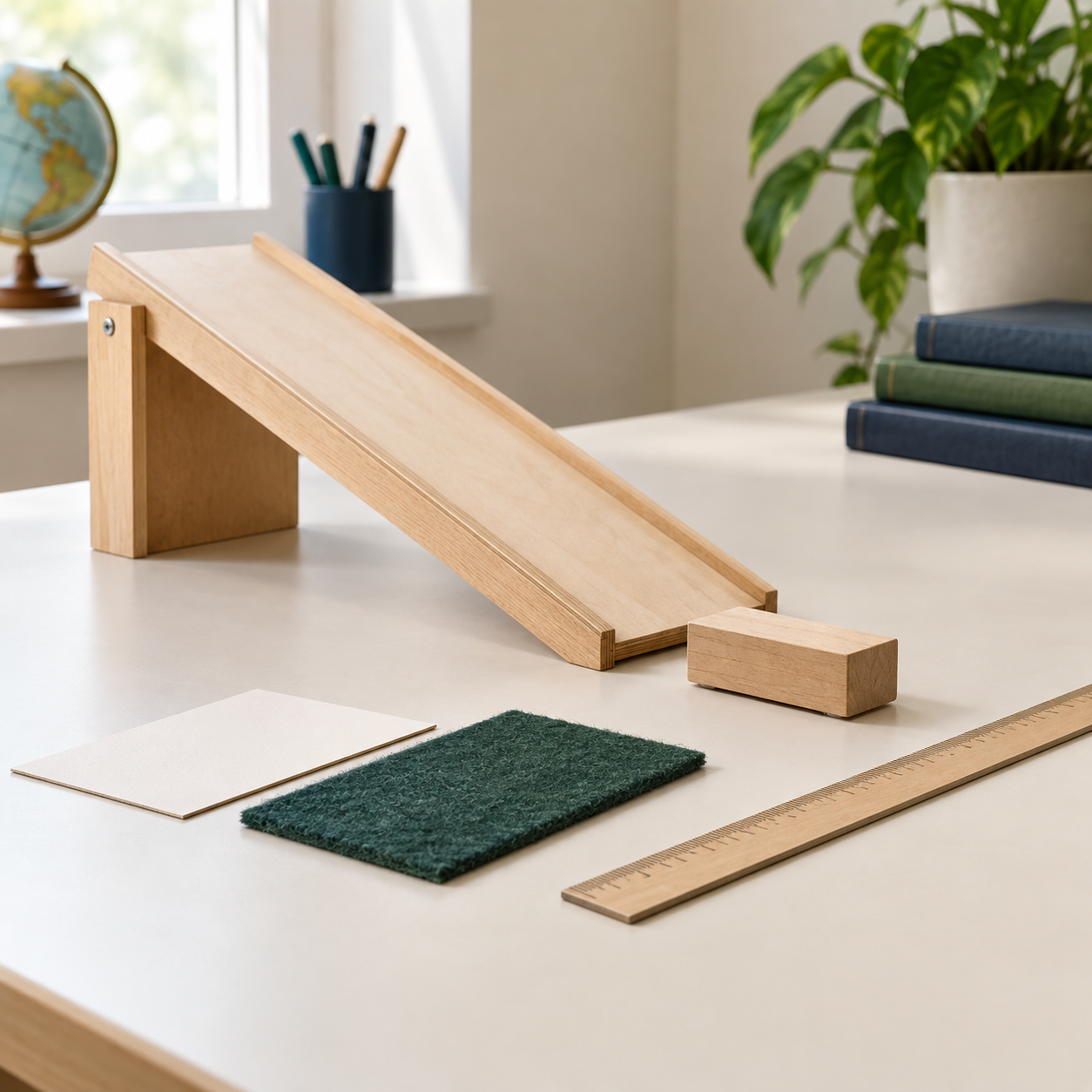
Contextual illustration of a ramp, block, ruler and alternative run-out surfaces. It is not a recorded experimental result.Open image full size
Planning a fair testSlide 1 of 13
You Do · practiseGROW · Week 5

What will we change?

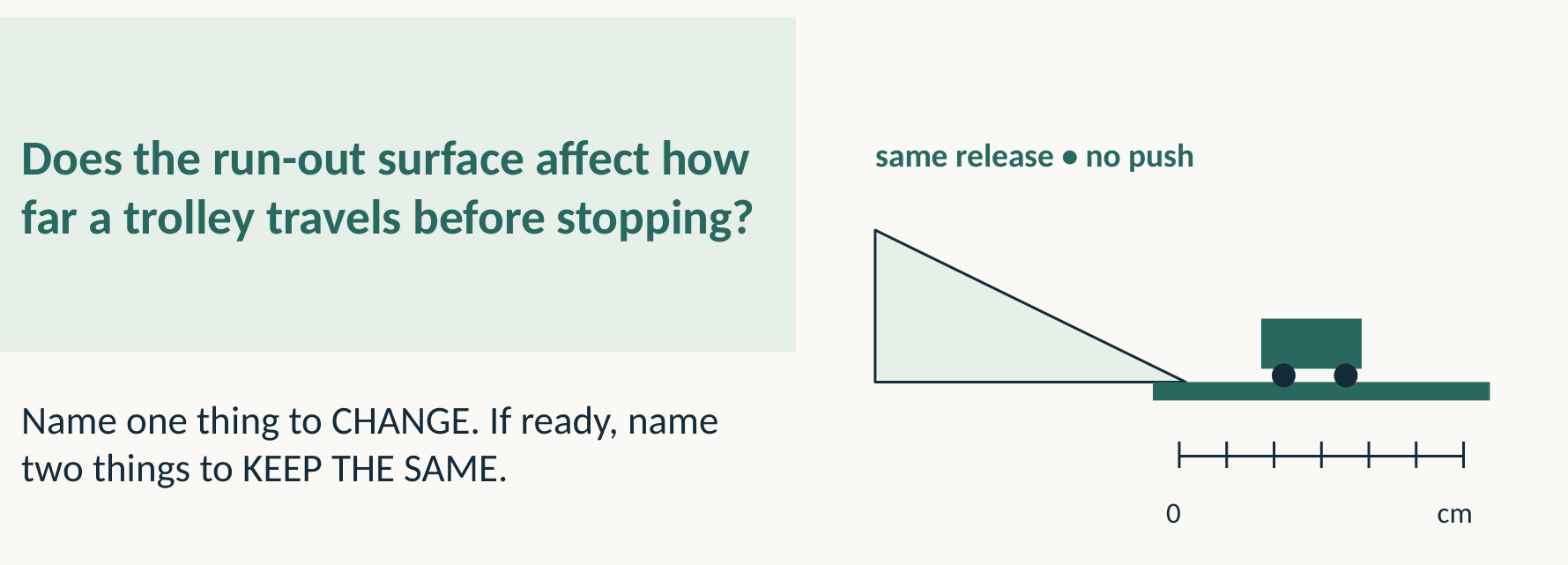
A trolley travels from a ramp onto a horizontal run-out surface. A distance scale starts at zero at the ramp foot and is labelled centimetres; no measured result is supplied.
Original teaching-pack diagram and labels.
Open image full size
Read the slide text
A trolley travels from a ramp onto a horizontal run-out surface. A distance scale starts at zero at the ramp foot and is labelled centimetres; no measured result is supplied. Does the run-out surface affect how far a trolley travels before stopping? Name one thing to CHANGE. If ready, name two things to KEEP THE SAME. 0 cm same release • no push
Planning a fair testSlide 2 of 13
I Do · learn and modelGROW · Week 5

Three steps in the investigation

1 Name the variables.

2 Plan three trials for each surface.

3 Judge what the results can tell us.

Planning a fair testSlide 3 of 13
I Do · learn and modelGROW · Week 5

Watch an unfair comparison

The adult changes the surface AND adds a push.

The trolley stops farther away.

Which change caused that difference?

What would you change about the method?

Planning a fair testSlide 4 of 13
I Do · learn and modelGROW · Week 5

Repair the method

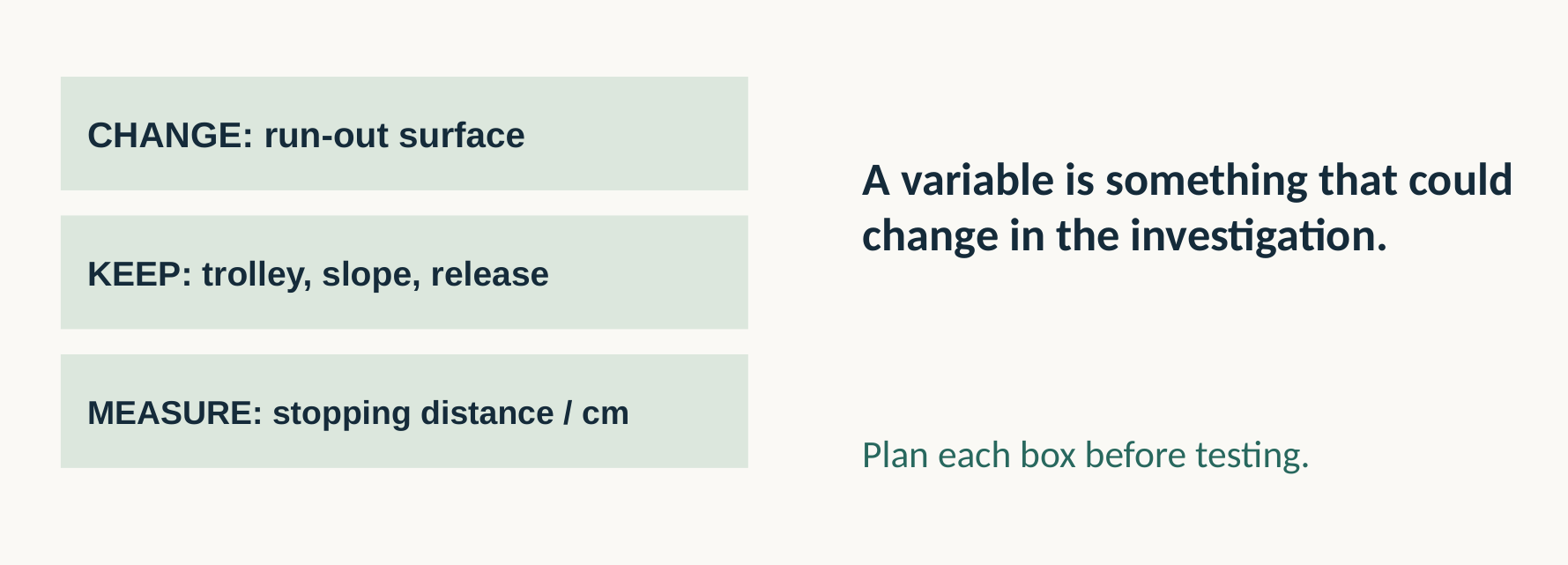
Three planning boxes separate CHANGE (run-out surface), KEEP (trolley, slope, release) and MEASURE (stopping distance in centimetres).
Original teaching-pack diagram and labels.
Open image full size
Read the slide text
Three planning boxes separate CHANGE (run-out surface), KEEP (trolley, slope, release) and MEASURE (stopping distance in centimetres). CHANGE: run-out surface KEEP: trolley, slope, release MEASURE: stopping distance / cm A variable is something that could change in the investigation. Plan each box before testing.
Planning a fair testSlide 5 of 13
We Do · think togetherGROW · Week 5

Classify the five variables

The surface the trolley rolls on

Distance the trolley travels

Height of the ramp

Which trolley we use

How the trolley is released

Planning a fair testSlide 6 of 13
We Do · think togetherGROW · Week 5

Check the variable roles

CHANGE AND MEASUREKEEP THE SAME
CHANGE: run-out surface MEASURE: stopping distance / cmRamp height Same trolley Release mark; no push
Planning a fair testSlide 7 of 13
We Do · think togetherGROW · Week 5

Direct one useful correction

Check the ruler’s zero against the agreed start.

Is the ruler end the same as its zero mark?

Direct the adult to correct one control.

Planning a fair testSlide 8 of 13
I Do · learn and modelGROW · Week 5

Say the plan before touching kit

I will change ___. I will keep ___ and ___ the same. I will measure ___ in ___.

Your plan should make the comparison clear.

Planning a fair testSlide 9 of 13
We Do · think togetherGROW · Week 5

Fair method or a problem?

Same ramp height; different surfaces

Different ramp heights AND different surfaces

Three repeats for each surface

Ignoring a result you did not like

Measuring in ‘about a ruler’

Planning a fair testSlide 10 of 13
We Do · think togetherGROW · Week 5

Check what each problem means

SUPPORTS THE COMPARISONNEEDS CORRECTION
Same height; one planned change Repeats with method unchangedTwo changed causes: unclear Discarding disliked data: biased ‘About a ruler’: no clear unit
Planning a fair testSlide 11 of 13
We Do · think togetherGROW · Week 5

Keep an unexpected result

A trolley stopped much farther away on Trial 3. That is something to investigate.

Keep the value. Note any method issue. Plan a repeat.

Planning a fair testSlide 12 of 13
We Do · think togetherGROW · Week 5

Keep your plan for Tuesday

I will change the surface, control the release and measure stopping distance in cm.

Three repeats can show consistency. They cannot repair an unfair method.

Planning a fair testSlide 13 of 13

Use the controls or left and right arrow keys. Printing includes pupil content; model answers remain separate.