Friction: friend and enemy
One force. Different jobs.
Explain what friction does, and when it helps or hinders.
FORCES / CONTACT / EVIDENCE
 Open image full size
Friction acts at a contact
Read the slide text
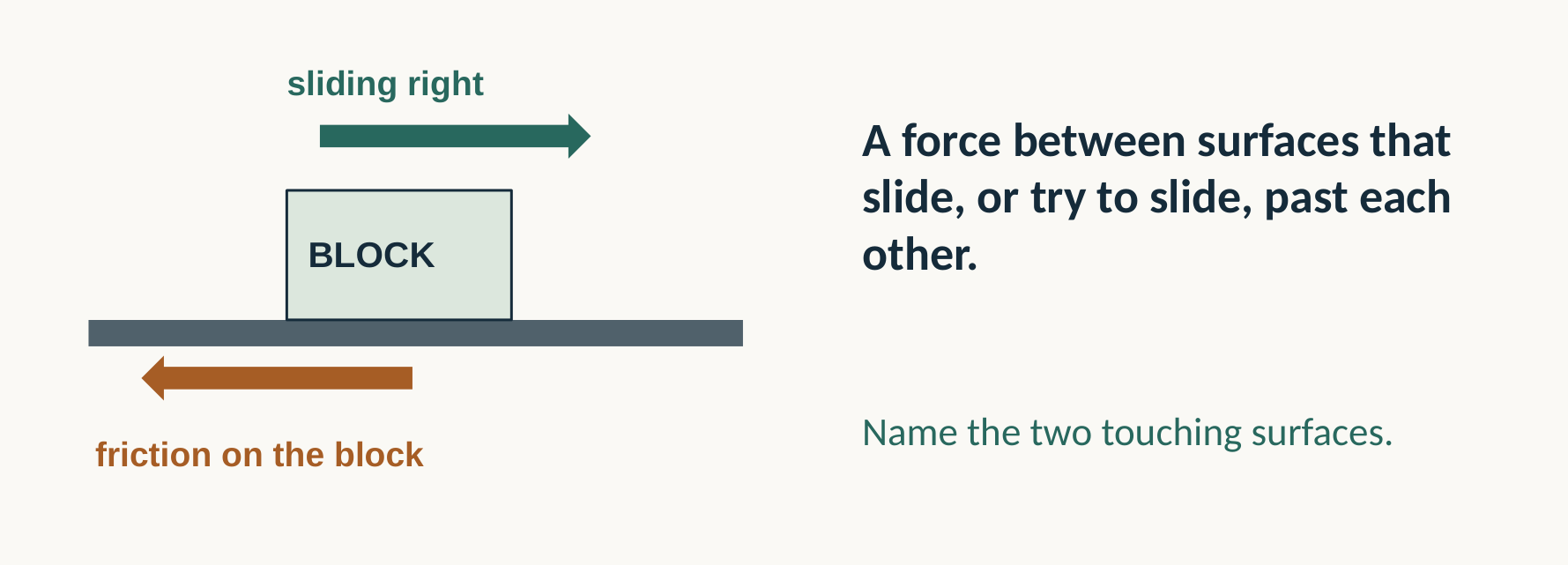
The block slides right on a horizontal surface. The sliding arrow points right; friction on the block points left.
BLOCK
sliding right
friction on the block
A force between surfaces that slide, or try to slide, past each other.
Name the two touching surfaces.
Change one thing: the surface
Read the slide text
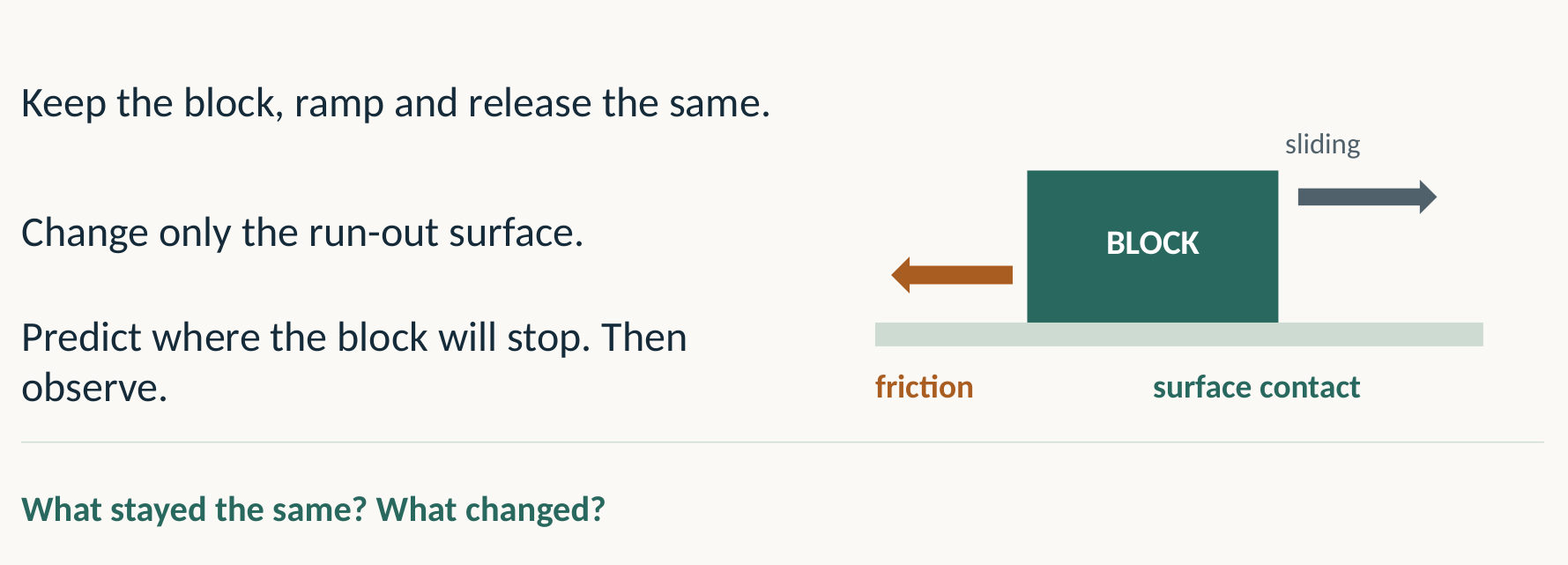
A block slides right while friction at its surface contact points left. Only the run-out surface is changed in the proposed comparison.
Keep the block, ramp and release the same.
Change only the run-out surface.
Predict where the block will stop. Then observe.
What stayed the same? What changed?
BLOCK
sliding
friction
surface contact
Build a complete explanation
Read the slide text
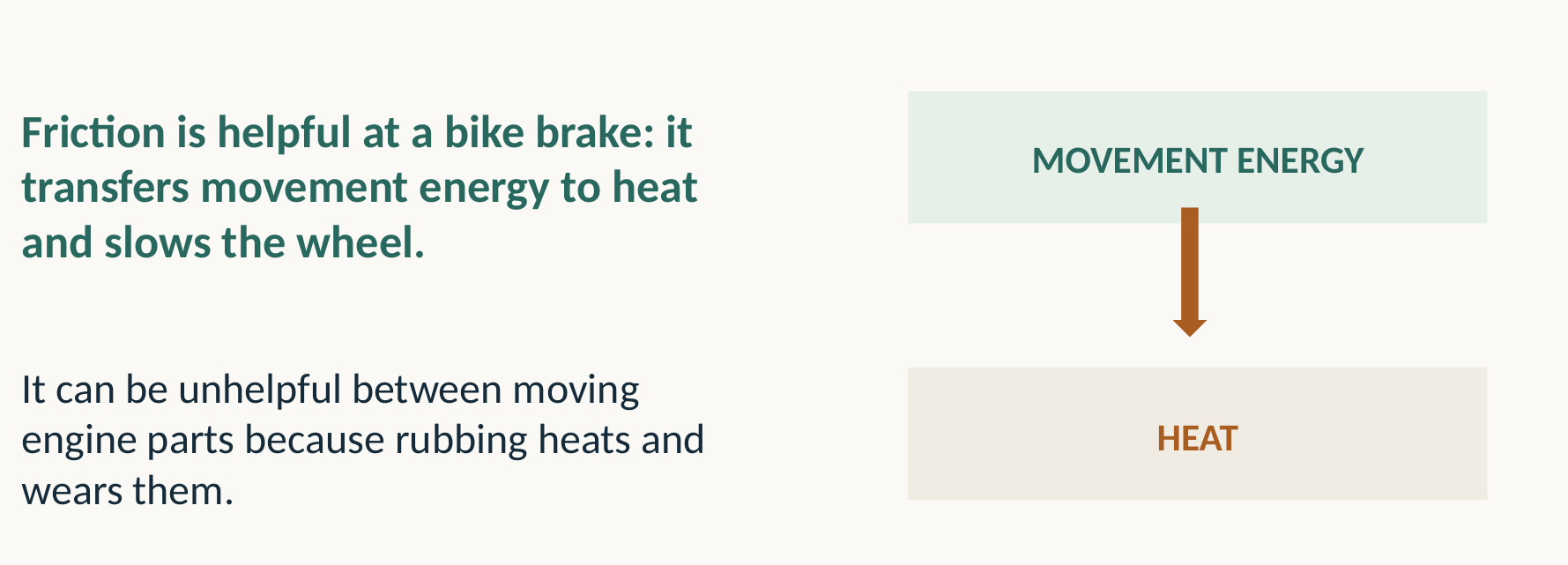
A downward arrow connects movement energy to heat, illustrating energy transfer by friction.
Friction is helpful at a bike brake: it transfers movement energy to heat and slows the wheel.
It can be unhelpful between moving engine parts because rubbing heats and wears them.
MOVEMENT ENERGY
HEAT
Use the controls or left and right arrow keys. Printing includes pupil content; model answers remain separate.