Backbones and no backbones
One body clue. Two animal groups.
I can use evidence to decide whether an animal has a backbone.
 Open image full size
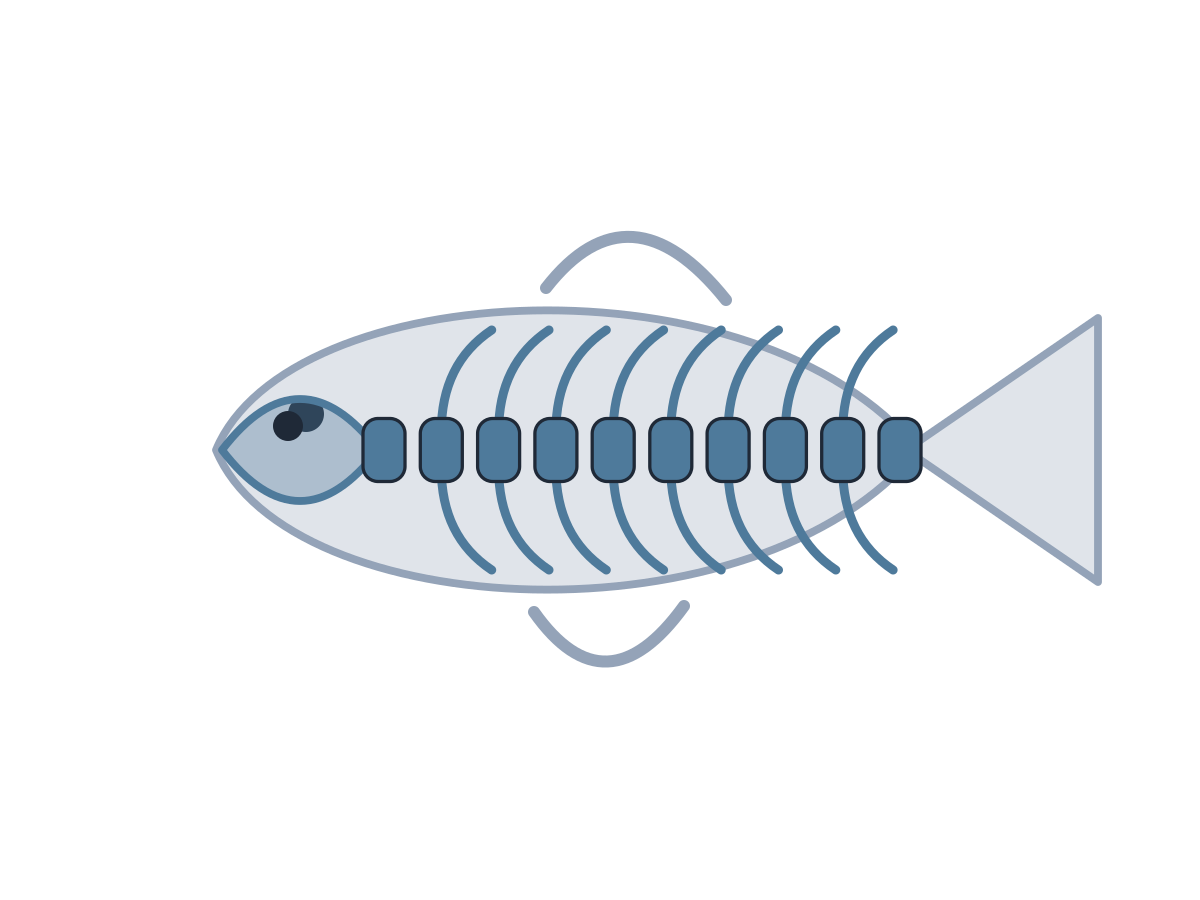
Look for bones inside
Read the slide text
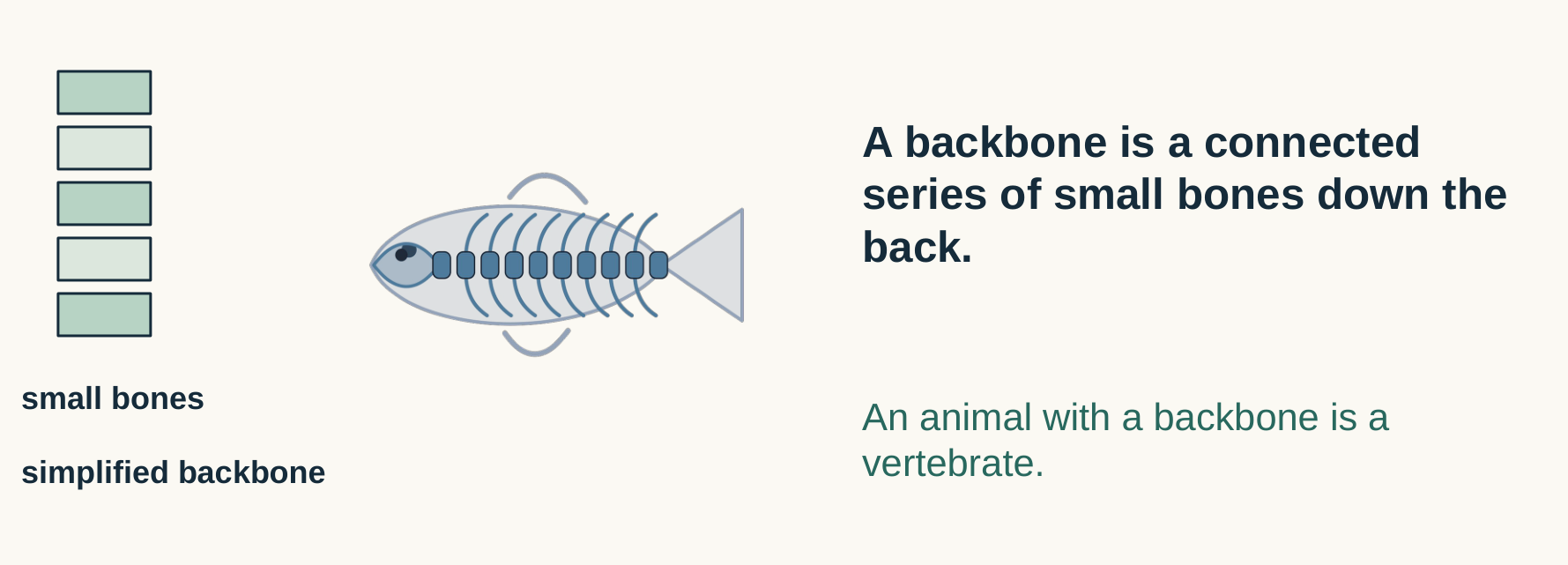
A column of small rectangular bones models a backbone; an adjacent fish diagram places a backbone inside its body.
simplified backbone
small bones
A backbone is a connected series of small bones down the back.
An animal with a backbone is a vertebrate.
A hard outside is different
| FISH | CRAB |
|---|---|
| Bones inside the body. A backbone inside. Vertebrate. | Hard case outside the body. No backbone. Invertebrate. |
Open image full size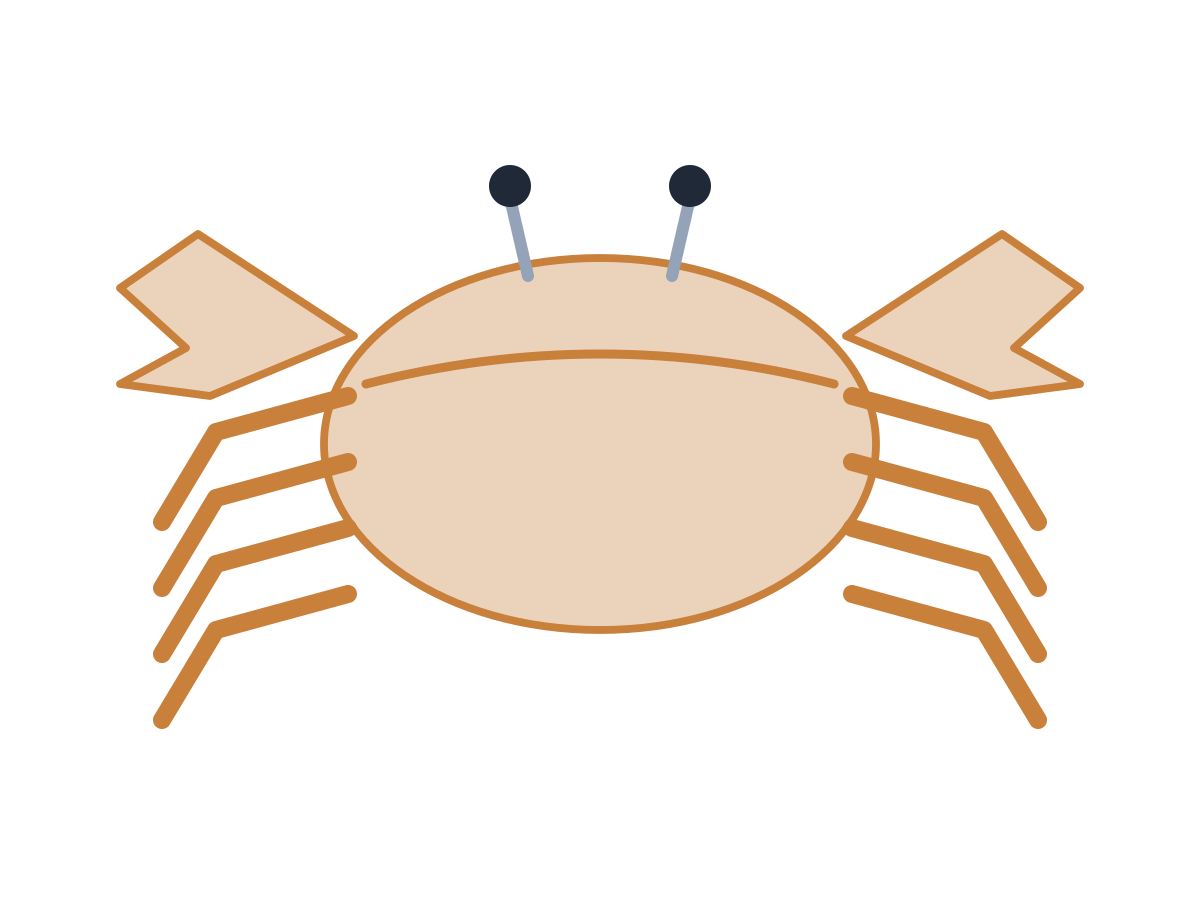 Open image full size
Decide before the explanation
Fish: bones inside include a backbone.
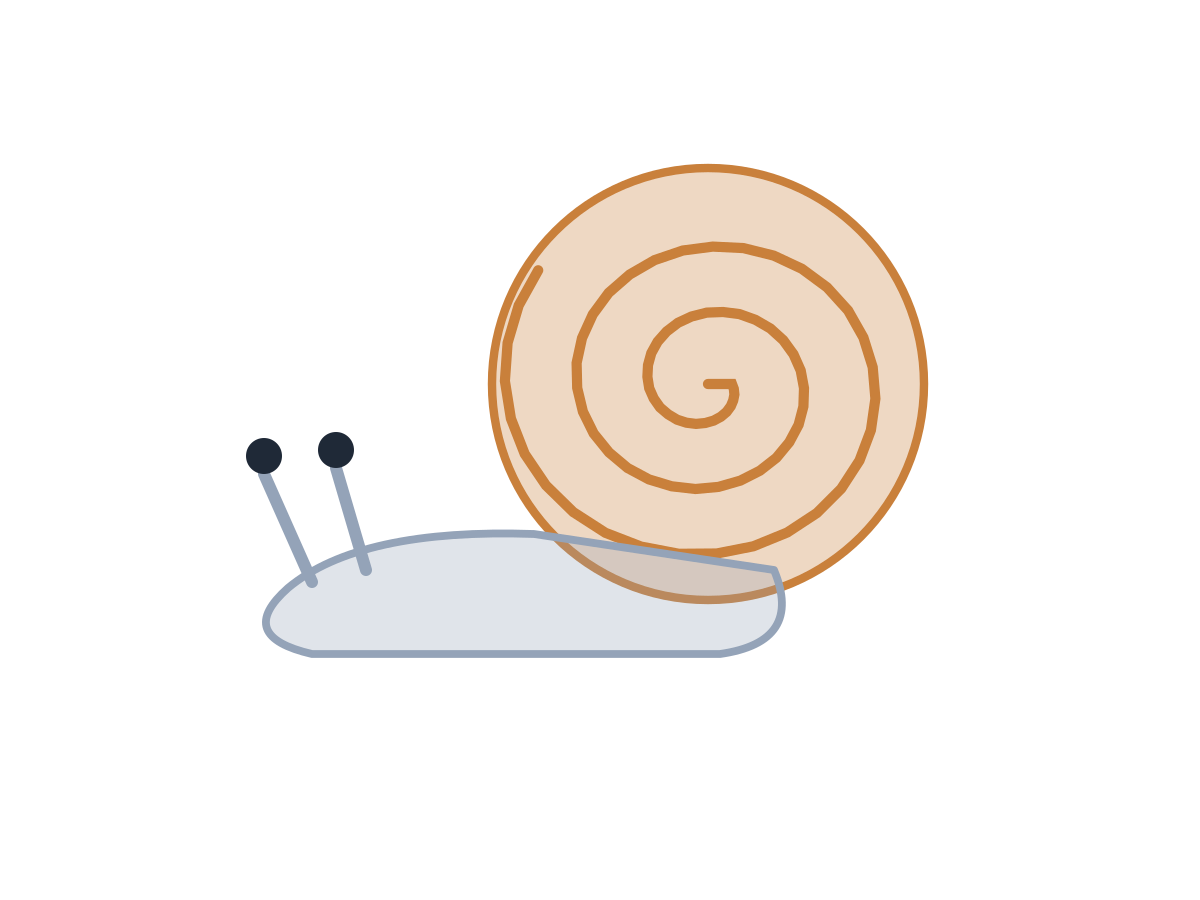
Snail: a shell, but no backbone.
Frog: bones inside include a backbone.
Choose: vertebrate or invertebrate.
 Open image full size
Try the rule again
Mouse: an internal backbone.
Crab: a hard outside; no backbone.
Earthworm: fluid support; no backbone.
Which body clue decides each group?
 Open image full size
Use because to show your reason
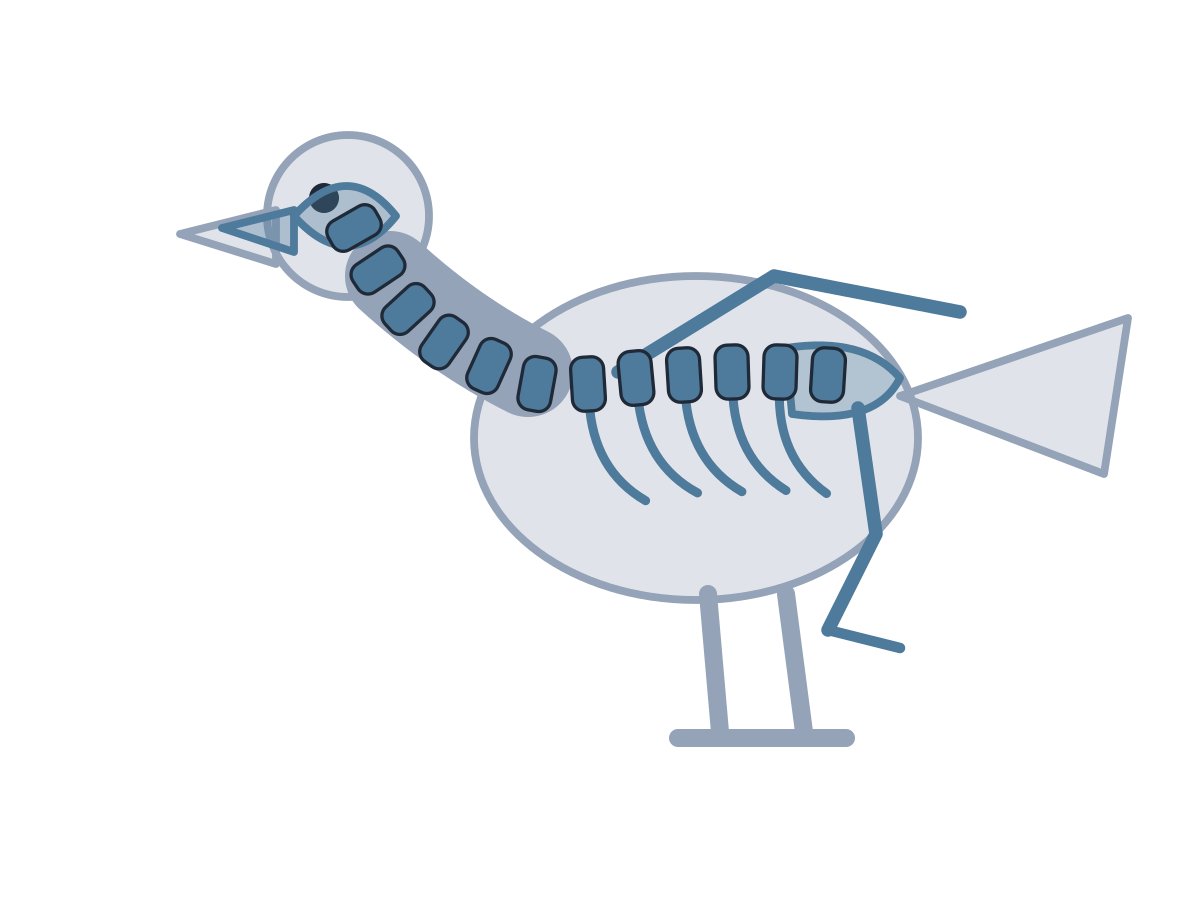
The robin is a vertebrate because its body has an internal backbone.
Name the animal. Name the group. Give the body evidence.
 Open image full size
Use the controls or left and right arrow keys. Printing includes pupil content; model answers remain separate.