A timeline with a reason
Why can a ranking change while dates stay fixed?
Build a proportionally spaced twentieth-century timeline and justify a significance ranking for a named question.
Use a detail. Explain what it supports.
Start with what you know
Which comes first: 1918 or 1928?
How many years separate them?
Does later always mean more important?
Words that help
| CHRONOLOGY | CRITERION |
|---|---|
| order by date. Scale: equal years, equal gaps. | a judgement rule. Significance: importance for a question. |
A date fixes a position
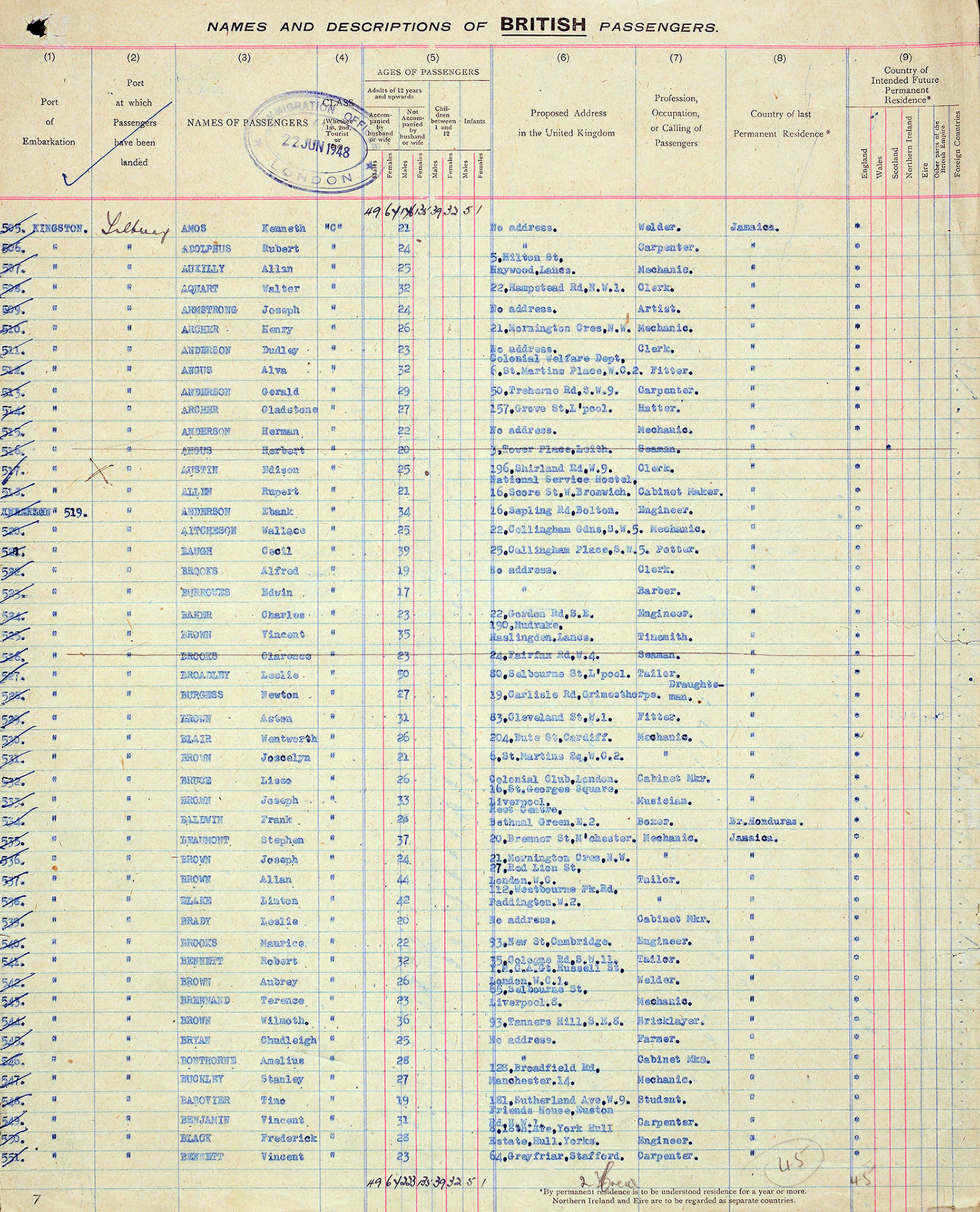
W records the 1948 Windrush arrival.
Its date stays the same whatever question we ask.
 Open image full size
Watch a worked example
| SEQUENCE | SIGNIFICANCE |
|---|---|
| Dates fix the order of the cards. | A question and evidence shape the ranking. |
Try one together
On a 100 mm century line, 1948 is at 48 mm.
Where would 1963 go?
How big is the gap from 1948 to 1963?
Choose, then explain
Which statement is correct?
A. A blank gap proves nothing happened.
B. A blank gap means no selected card is shown.
Choose and explain.
Now it is your turn
| YOUR TASK | EXPLAIN |
|---|---|
| Place six cards on a scaled timeline. Rank three for rights and participation. | Re-rank for migration and explain the change. |
Make the reasoning visible
Point to one detail you used.
Say how it helped your answer.
Name one thing it cannot show.
Keep your first answer for the check.
Check the reasoning
Reveal the checks after pupils have kept their first response.
Reveal the model
| SCALE CHECK | LATER CARDS |
|---|---|
| 1918:18; 1928:28; 1948:48 mm. | 1963:63; 1965:65; 1973:73 mm. |
Your voice shapes the next step
Choose one idea to share, or pass.
Your listener tells you what they heard.
Keep or change your idea; give a reason.
Tell us what would help you next time.
Before you go
What keeps chronology fixed?
What can change a significance ranking?
Show one detail that helped.
Choose a next step.
Use the controls or left and right arrow keys. Printing includes pupil content; model answers remain separate.